
 Autoflower Seeds
 Feminized Seeds
 New Releases
 USA Cannabis Seeds
 High THC Strains
 High Yield Cannabis Strains
 Precision F1 Hybrids
 Washing Strains
 Cup Winning Cannabis Seeds
 Chill Out Cannabis Strains
 Amsterdam Cannabis Seeds Classics
 Best Taste & Aroma Cannabis Seeds
 Regular Seeds
 Merchandise
 Merchandise
 Blog
Blog Contact Us
 Wholesale Login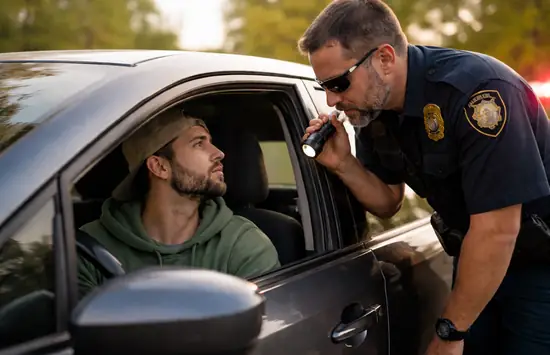
Can Cops Search Your Car if They Smell Weed in 2026?
You're driving home with an eighth in the glovebox. A cop pulls you over for a busted taillight. The officer walks up, takes a sniff, and says the three words that used to kill your afternoon on the spot: “I smell weed.”
What happens next in 2026 depends on what state you're in, what else the officer has to go on, and whether you know what to say. The rules have changed hard over the last five years, and courts are still rewriting them in real time. Here's where things stand.
What Does “Probable Cause” Actually Mean?
Police can't just search your car because they feel like it. They need what's called probable cause, meaning a reasonable belief that evidence of a crime is inside the vehicle. And most of the time, they don't need to stop and get a warrant first. That's because of the automobile exception, a Supreme Court rule dating back to 1925 when a Prohibition-era liquor case, Carroll v. United States, created a carve-out for cars. The logic was simple: vehicles are mobile, so making officers wait for a warrant gave suspects time to drive off with the evidence.
For decades after that, the smell of weed checked the probable cause box all by itself. Cops called it the plain smell doctrine, a spinoff of the plain view doctrine. When pot was illegal everywhere, the equation worked cleanly: smell equals crime. Legalization blew that equation up.
Can Cops Search Your Car if They Smell Weed Alone?
In most legal-cannabis states, the answer in 2026 is no. Not without something else to go on.
Once possessing cannabis became legal for adults, the smell of cannabis stopped being automatic evidence of a crime. State supreme courts caught on, and the rulings have been stacking up. In September 2024, the Illinois Supreme Court held that the odor of burnt cannabis alone does not give police probable cause to search a car. A year later, Florida's Second District Court of Appeal joined the club, ruling in Williams v. State that smell by itself no longer establishes probable cause because hemp and medical marijuana made cannabis legal to possess in multiple forms.
The Michigan Supreme Court reached the same conclusion in People v. Armstrong, holding that smell alone no longer constitutes probable cause after voters legalized recreational use in 2018. Pennsylvania's high court ruled the same way in Commonwealth v. Barr. Minnesota, New Jersey, Vermont, Delaware, Colorado, and Massachusetts have all landed in similar places.
In these states, the smell of weed can still be a factor in the totality of circumstances cops use to justify a search. It just can't be the only one. They need other stuff. Admissions (you told them you smoked). Paraphernalia in plain view. Obvious impairment. Erratic driving. A driver who throws something out the window during the stop. Without one of those, a search built on smell alone should not survive a motion to suppress.
Which States Let Cops Search Over a Weed Smell?
Plenty of them. If cannabis is still illegal in your state, the plain smell doctrine is usually still on the books. Tennessee, North Carolina, Alabama, South Carolina, Kansas, Idaho, and Wisconsin courts have all kept it alive, even where hemp is legal.
California is the outlier on the legal side. Recreational weed has been legal there since 2016, but California courts still let officers search based on smell because smoking in a car on a public road remains illegal. The odor of burnt cannabis gives the officer reason to believe that particular law was broken.
Illinois has the weirdest split of any state. In the same term that killed the plain smell doctrine for burnt cannabis, the state supreme court ruled the opposite way on raw cannabis in People v. Molina, reasoning that Illinois law requires weed to be transported in a sealed, odor-proof container. So a whiff of a joint your friend smoked last night is not probable cause. A whiff of the flower in your backpack is.
Federal law is its own animal. Cannabis is still a Schedule I drug at the federal level, which means national parks, border crossings, airports, and federal agents follow their own rulebook. State court protections don't stop DEA or Customs and Border Protection.
Why Hemp Broke the Plain Smell Doctrine
The 2018 federal Farm Bill legalized hemp, defined as cannabis containing less than 0.3% THC. Hemp and high-THC pot come from the same plant and smell identical. No human nose can tell them apart. Drug-sniffing dogs can't either, as multiple state crime labs have now publicly admitted after testing their K-9 units with legal hemp samples.
That's the argument defense attorneys keep winning with. If the smell could be coming from legal hemp, legal CBD flower, or a medical marijuana cardholder's car, then the smell by itself doesn't reliably point to a crime. Courts that have rewritten their rules have leaned hard on this point. The olfactory evidence that worked in 1985 is no longer reliable when a significant share of the products it's detecting are legal to buy at a gas station.
Barney's Farm has been breeding cannabis in Amsterdam since 1992. In three decades of working with terpene-heavy strains like Pineapple Chunk, we've watched that distinctive aroma go from felony evidence in most of the U.S. to background noise in half the country. The chemistry hasn't changed. The law has.
What to Do if a Cop Says They Smell Weed
Keep your hands visible. Put them on the wheel. At night, turn on the dome light. Provide license and registration without being asked twice. Be polite. None of this has anything to do with weed. It keeps the stop from escalating into something worse.
Do not consent to a search. If the officer asks to search your car, you can say, clearly and calmly: “I do not consent to any searches.” Say it out loud. Say it on camera if possible. The officer may search anyway if they decide they have probable cause, and you should not try to physically stop them. But you've now put your objection on the record. That's what your lawyer will need in court.
Do not answer incriminating questions. If an officer asks whether you have weed in the car, whether you've been smoking, or where you're coming from and going, you can decline. “I'd rather not answer questions without a lawyer” is a complete sentence. Using your Fifth Amendment rights is not an admission of guilt and cannot legally be held against you.
Don't try to explain. Casual admissions are the exact extra factor courts cite to justify searches that otherwise would have failed. Saying something like “I smoked earlier, but there's nothing in the car” has personally sunk more than one of the cases above. Keep the admissions at zero.
Know what state you're in. Laws change at state lines. A drive from Illinois to Indiana means different rules at different exits on the same highway. Cops apply the law of the state you're currently in, not the one you started in. If you're crossing into a prohibition state with product in the car, the legal protections behind you don't travel with you.
Don't flash a medical card without thinking. In some states, producing a medical marijuana card in response to a smell accusation has actually helped establish probable cause, because it suggests the cardholder might have been smoking in the car (which is illegal everywhere, medical or not). Talk to a lawyer about how this plays in your state before the next time you get pulled over.
The Bottom Line
Cannabis has been legal somewhere in the U.S. since 1996. The legal machinery around traffic stops has been catching up in slow motion ever since. In 2026, the trend line is clear: state supreme courts are pulling the plain smell doctrine apart, piece by piece, wherever weed is legal to possess. The Fourth Amendment is finally doing some of the work it was supposed to do.
The protection only works if you use it. Don't consent. Don't talk. Don't argue roadside. Know your state's latest ruling, because this area of law keeps shifting. And if you get searched and arrested anyway, find a lawyer who's been tracking what the state supreme court did last week.
Barney's Farm has been developing premium cannabis genetics since the 1980s, with over 40 Cannabis Cup wins. Explore our full cannabis seed catalog and find strains bred for every climate and skill level.