
 Autoflower Seeds
 Feminized Seeds
 New Releases
 USA Cannabis Seeds
 High THC Strains
 High Yield Cannabis Strains
 Precision F1 Hybrids
 Washing Strains
 Cup Winning Cannabis Seeds
 Chill Out Cannabis Strains
 Amsterdam Cannabis Seeds Classics
 Best Taste & Aroma Cannabis Seeds
 Regular Seeds
 Merchandise
 Merchandise
 Blog
Blog Contact Us
 Wholesale Login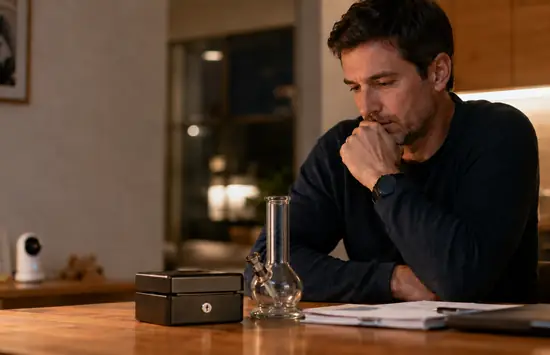
Cannabis and Child Custody: Can Weed Cost You Your Kids?
You bought your eighth, locked it in a drawer, smoke after the kids are in bed, and never drive impaired. You are still wondering if your ex's lawyer can use any of it against you in court. The honest answer is yes, they can try, and sometimes they succeed, even in states where every step of what you are doing is legal.
This is what parents in the United States need to know about how cannabis actually plays out in custody disputes and CPS investigations, what triggers an investigation, and what you can do to keep the smoke away from your family court file.
Can smoking weed lose you custody of your kids?
The short version is no, not on its own, but it can absolutely be a factor. Family judges work under a doctrine called the best interest of the child, and that standard lets them weigh anything they think might affect a kid's safety or development. Substance use sits comfortably in that bucket whether the substance is bourbon, oxycodone, or a quarter of OG.
In most states, courts treat cannabis roughly the same way they treat alcohol. Occasional, responsible adult use after the kids are asleep usually does not torpedo a custody case. Heavy daily use, smoking in front of children, driving impaired with kids in the car, or leaving edibles on the kitchen counter can flip the case fast. Some judges still carry a stigma about weed that they would never apply to a bottle of wine, and that bias varies wildly by county and by individual judge.
The legal terrain is messy. Twenty-four states plus DC have legalized adult cannabis use, but it remains a Schedule I drug at the federal level. That federal status gives prosecutors and conservative judges room to treat cannabis differently than other legal substances. Medical card holders in states like Minnesota and Washington have statutory protection that bars courts from restricting parental rights based on patient status alone, though enforcement is uneven and judges sometimes ignore those statutes outright.
When does CPS get involved over cannabis use?
Child Protective Services investigations triggered by cannabis are not rare. An investigation by The Marshall Project and CBS News found that, between 2017 and 2023, more than 70,000 mothers were referred to police or prosecutors over alleged substance use during pregnancy, with marijuana driving a huge share of those referrals. The reporting documented Black and Hispanic mothers being disproportionately targeted, and many of the positive drug tests turned out to be triggered by poppy seed bagels, CBD products, prescribed medications, or the fentanyl from epidurals during labor.
That is the part nobody warns new parents about. Hospitals are not required to run confirmation tests before reporting a positive screen, and once the file is open with CPS, parents can spend months or years trying to close it. Some lose temporary custody of their newborns in the hospital before they ever get to take the baby home.
For parents already raising kids, the CPS trigger points are predictable. Smoking around children. Edibles within reach. Visible impairment while caregiving. A DUI arrest. A custody-battle ex who picks up the phone and reports you. CPS does not take kids because you smoke weed. They take kids when they believe your use is putting children at risk, or when local norms are stricter than they ought to be.
How judges weigh weed in family court
Family court is not a science. Two judges in the same county can hear nearly identical facts and reach opposite conclusions. What most of them are actually evaluating is impairment and exposure. Are you high while parenting? Is the kid breathing secondhand smoke? Can the kid access your stash?
A few patterns hold across jurisdictions. Drug tests show up often, and THC stays detectable in urine for weeks and in hair for months regardless of when you actually used. A positive result does not prove you were high last Tuesday at school pickup. It proves you used at some point in the recent past. Lawyers and judges sometimes treat that distinction casually.
History matters too. A clean record makes a single positive test easier to explain. Prior CPS involvement, a previous DUI, or any visible struggle with substance use shifts the conversation immediately. So does what your ex's attorney is doing. In a contested custody fight, a sharp adversary will reach for any leverage available. Cannabis often serves as that leverage even when it is not the real issue, because raising it forces you to defend yourself instead of building your own case.
Texas, Tennessee, Georgia, and the Carolinas remain particularly hostile. Even in fully legal states like California, Oregon, and Colorado, family court culture has lagged behind statutory reform, and a parent acting entirely within the law can still find themselves explaining their cannabis habits to a skeptical judge.
Storing cannabis when there are kids at home
Barney's Farm has been breeding cannabis genetics out of Amsterdam for over 30 years, and in our experience watching legalization roll out across the United States, a lot of basic safety knowledge from the prohibition era got left behind. If you keep or grow cannabis at home with children in the house, the standard you should be holding yourself to is roughly the one you would use for a prescription opioid or a loaded firearm.
Lock everything. Not in a drawer your eight-year-old can open, not on a high shelf, not vaguely "out of sight." A small lockbox costs less than an eighth and removes the entire question of access. Edibles deserve extra paranoia because the gummies and chocolates were designed to look like exactly the candy kids want to eat. Repackage them out of their original wrappers if you have to. Keep them separated from regular food. Mark them clearly.
If you cultivate, your grow space needs to be a room kids cannot enter without supervision. Lockable door, separate key, ideally not the same room as anything they need to access. The point is not legal cover, though it helps with that. The point is that a curious seven-year-old plus an unsecured flowering plant is how stories end in a hospital and a CPS file. Our breeding team has worked with home growers for decades, and the constant theme is that responsible cultivation starts with controlling exactly who has access to your plants.
Do not smoke inside if you can help it, and never near children. Vapor and combustion both leave residue on furniture, clothes, and walls. If you are anticipating a custody dispute, switch to edibles or tinctures used only when the kids are with the other parent. The optics matter to the legal outcome whether you like it or not.
What the research actually says about edibles and kids
This is the section every responsible cannabis parent needs to read once and remember forever. A peer-reviewed study published in Pediatrics tracked national poison control data and found a 1,375% increase in edible cannabis exposures among children under six between 2017 and 2021, with the overwhelming majority of those exposures happening in the child's own home. Seventy percent of the kids had central nervous system depression. About one in five was hospitalized.
None of those families thought it would happen to them. The kids found gummies in a backpack, a brownie left on a counter, a chocolate bar in a nightstand. The CDC's guidance on cannabis exposure in children is blunt about it. Childproof containers, locked, out of reach, separated from real food. None of that is optional if you want to keep your stash and your kids in the same house.
What to do if your cannabis use comes up in court
First: get a lawyer who has handled cannabis cases specifically. Family law and cannabis law overlap in ways that surprise generalist attorneys. Some divorce lawyers give terrible advice on this, like telling clients to quit cold turkey right before a hearing, which does nothing for a drug test that is still going to come back positive for weeks.
Be honest with your lawyer about how much you use, how often, and where you store it. They cannot defend you if they get blindsided in front of the judge.
Document your responsibility. Photos of your locked storage. Receipts from a licensed dispensary instead of a guy named Steve. A clean driving record. A neighbor or family member who can credibly testify that they have never seen you impaired around your kids. Build the evidence file before you need it.
Consider stopping for the duration of the case. This is the unromantic advice that most cannabis-friendly attorneys eventually give clients. A negative drug test takes a weapon out of the other side's hand. You can pick it back up after the dust settles and the orders are signed.
Know your rights if CPS shows up at your door. You generally do not have to consent to a home search or a drug test without a court order. You can request an attorney before answering questions. Stay calm, stay polite, and stay in control of what you say. Anything you volunteer can and will end up in the file.
The bottom line
The cannabis legalization wave has moved faster than family court culture, and parents are stuck in the gap. Federal scheduling, judicial bias, and an inconsistent CPS apparatus mean that perfectly legal behavior can still create legal problems. The parents who come out of these cases intact tend to be the ones who treated cannabis like adult business from day one. Locked storage. No impairment around the kids. No driving high. A clear willingness to demonstrate all of that on demand.
You do not have to apologize for being a parent who enjoys cannabis. You do have to be smarter about it than the law assumes you are.
Barney's Farm has been developing premium cannabis genetics since the 1980s, with over 40 Cannabis Cup wins. Explore our full cannabis seed catalog and find strains bred for every climate and skill level.