
 Autoflower Seeds
 Feminized Seeds
 New Releases
 USA Cannabis Seeds
 High THC Strains
 High Yield Cannabis Strains
 Precision F1 Hybrids
 Washing Strains
 Cup Winning Cannabis Seeds
 Chill Out Cannabis Strains
 Amsterdam Cannabis Seeds Classics
 Best Taste & Aroma Cannabis Seeds
 Regular Seeds
 Merchandise
 Merchandise
 Blog
Blog Contact Us
 Wholesale Login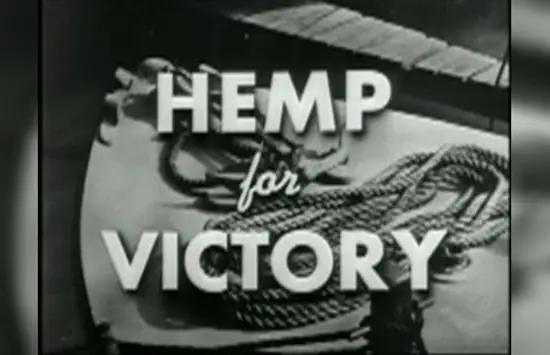
Cannabis in WWII: When the US Government Begged Farmers to Grow Hemp
In 1937 the United States made it almost impossible to legally grow cannabis. Five years later the same government was practically pleading with farmers to plant as much of it as they could get in the ground. No apology. No walking back the propaganda. Just a war, a supply crisis, and a sudden case of amnesia about everything Washington had said about the plant.
This is the story of Hemp for Victory, one of the strangest chapters in American cannabis history, and how the federal government flipped from prosecutor to recruiter in the span of a few growing seasons. It is also a reminder that the rules around this plant have always bent to whoever needed something from it.
Why did the US government suddenly need hemp?
After the Japanese attack on Pearl Harbor in December 1941, the United States was fully in the war, and the military ran on natural fiber. Rope, ship rigging, cordage, parachute webbing, fire hoses, thread. Almost none of it was synthetic yet. A single warship needed miles of cordage, and the young synthetic fibers of the day were nowhere near ready to cover that kind of demand.
The problem was where that fiber came from. Manila hemp, also called abaca, shipped in from the Philippines. Jute came from India. Sisal came from the Dutch East Indies. When Japanese forces seized the Pacific, those supply lines went dark, and the industrial fibers the country relied on suddenly ran short. The military needed a fiber crop it could grow on American soil, fast. There was one obvious candidate already sitting in the dirt.
Wait, wasn't hemp already illegal?
Basically, yes. Five years earlier, the Marihuana Tax Act of 1937 had buried hemp under registration, taxes, and paperwork that strangled the industry. The law did not bother separating fiber hemp from the plant people smoked. Farmers who had grown hemp for rope and sailcloth for generations were suddenly tangled in federal red tape and walked away from the crop.
War rewrote the math overnight. The same agencies that had treated the plant as contraband loosened the rules so farmers could grow fiber hemp for the Navy. The crop went from liability to national priority without anyone in Washington blushing about it.
What was the 'Hemp for Victory' film?
In 1942 the US Department of Agriculture put out a fourteen-minute black-and-white film called Hemp for Victory. A vintage narrator called hemp the old standby cordage fiber and walked farmers through its long history, how to plant it, and how to process the straw into rope and cloth. It was straight recruitment propaganda, aimed at the plow. The film even reached back centuries, reminding viewers that hemp had rigged the sailing ships and tall masts that carried the country through its earliest wars.
The film leaned hard on patriotism and on Kentucky's deep hemp roots to make the pitch land. On screen, harvesters rolled through fields of plants taller than a man while the narrator explained how the straw was retted, broken, and spun into the cordage the fleet depended on. It told farmers that in 1942, answering the government's request, they had already planted 36,000 acres of seed hemp, and it pushed for far more the following year. The message was blunt. American hemp had to meet the needs of the Army and the Navy, so get growing.
How American farmers answered the call
The response was real. Across Kentucky, the upper Midwest, and the Mississippi valley, farmers signed up in numbers nobody had seen since before prohibition. And the government put serious money behind the ask. It bankrolled the whole operation.
Seed in the ground. Growers got seed handed to them so crops could go in fast across designated hemp states.
Mills on the map. The government financed new hemp processing mills across Midwestern farm towns, turning straw into fiber close to where it was grown.
Guaranteed money. Fixed-price contracts meant farmers knew they would get paid, which took the gamble out of a crop the feds had spent years demonizing.
Those mills brought paychecks as well as fiber. Processing crews ran the plants through long shifts to keep the cordage moving, and with so many men overseas, a lot of that mill work fell to women on the home front. For a few seasons, hemp was a patriotic cash crop again. Recruiters worked the fields, American Grown Hemp turned into a wartime slogan, and the plant that had been a federal target was now stitched into parachutes and Navy rope.
What growing hemp at scale actually takes
Here is the part the propaganda glossed over. That program only worked because hemp is a tough, fast, generous plant when the genetics behind it are dialed in. Strip away the war footing and that is still the entire game in breeding. Stability, vigor, disease resistance, and yield that holds up when conditions get rough.
Barney's Farm has spent close to four decades chasing those exact traits, just pointed at resin and flower instead of fiber and rope. The principle does not change. A plant either earns its place in the field or it does not. Vigor means it shrugs off a cold snap or a wet week. Resistance means a single bad patch of weather does not wipe out the whole row. Yield means the work pays you back. Those were wartime priorities, and they are still the bar a serious strain has to clear.
Look at Critical Kush. It is a pure indica built from Critical Mass and OG Kush, and it grows like a workhorse. Sturdy frame, strong side branches loaded with dense colas, and outdoor plants that can climb past five feet and hand back close to a kilo each. That is the kind of plant a wartime planner would have killed for. Get it in the soil, let it run, and bring in a mountain at harvest.
Why did the government bury the film after the war?
Then the war ended, and the welcome wore off fast. Cheap imported fiber came flooding back from overseas, domestic demand for hemp collapsed, and the crop slid right back into its old illegal status. Contracts got canceled. The mills went quiet. The patriotic cash crop became contraband again, same plant, brand new attitude. In the decades that followed, federal restrictions only hardened, and the brief wartime truce was treated like an embarrassment best left unmentioned.
What happened next is the strangest part. The government acted like the film had never existed. For decades the USDA and the Library of Congress told anyone who asked that no such movie had ever been made. The film only resurfaced because cannabis activists, including hemp historian Jack Herer, tracked down surviving copies in 1989 and got them back into the public record. Today you can stream the whole thing straight from the National Archives, the same agency that once pretended it did not exist.
What 'Hemp for Victory' still says to growers today
The plant never changed. The politics did. In 1937 it was a menace. In 1942 it was a patriot. By 1945 it was a menace again. Same cannabis the whole time, judged entirely by who needed it and when.
That whiplash is the real takeaway. Cannabis law in America has rarely been about the plant itself. It has been about supply, money, fear, and whoever was holding power in a given decade. Growers have been reading that weather their entire lives, learning to tell the difference between what the law says and what the plant actually does.
Barney's Farm came up in that same long shadow, founded in Amsterdam in 1986 when most of the world still treated the plant as a crime, and built its catalog on a simple bet. Good genetics outlast bad laws. You can see those old wartime virtues, toughness and reliability, in a strain like Pineapple Chunk, a vigorous, stable plant that is mould and disease resistant and forgives a rough season while still delivering. The government once begged farmers to grow plants this hardy. Now you just order the seeds.
Hemp for Victory was a moment of honesty the United States spent decades trying to forget. The footage survived anyway. So did the plant.
Barney’s Farm has been developing premium cannabis genetics since 1986, with more than 40 Cannabis Cup wins. Explore our full cannabis seed catalog and find the genetics that fit how you actually medicate.