
 Autoflower Seeds
 Feminized Seeds
 New Releases
 USA Cannabis Seeds
 High THC Strains
 High Yield Cannabis Strains
 Precision F1 Hybrids
 Washing Strains
 Cup Winning Cannabis Seeds
 Chill Out Cannabis Strains
 Amsterdam Cannabis Seeds Classics
 Best Taste & Aroma Cannabis Seeds
 Regular Seeds
 Merchandise
 Merchandise
 Blog
Blog Contact Us
 Wholesale Login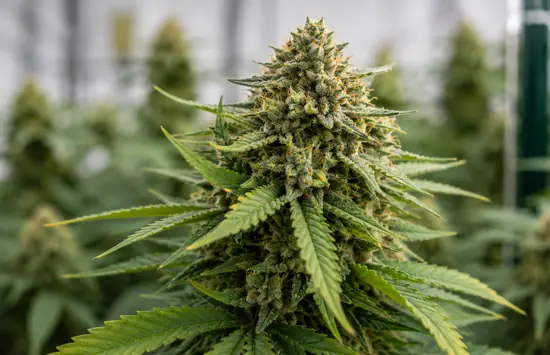
Cannabis Plant Anatomy: What Every Part Does (And Which Parts Actually Get You High)
Most people buy weed without really knowing what they're looking at. They smell the jar, they squint at the bud, they ask the budtender about THC percentage and call it a day. But ask them what the orange hairs do, what those frosty crystals actually are, or why nobody smokes the giant fan leaves, and you'll usually get a shrug.
That gap is fixable in about ten minutes. Cannabis is a plant with specific parts, each doing specific things, and only a few of those parts actually contain the compounds that get you stoned. Knowing which is which changes how you shop, how you smoke, and how you judge what's in front of you. Here's the whole map, top to bottom, and exactly where the chemistry happens.
What kind of plant is cannabis, anyway?
Before we get into bud anatomy, the genus itself is worth a quick beat. Cannabis is a dioecious plant, meaning each individual is either male or female, and the flowers of both sexes are small, greenish-yellow, and lack petals altogether. Botanists still argue about whether the genus contains one species or three (sativa, indica, and ruderalis), with some treating the latter two as subspecies of Cannabis sativa.
For consumers, only one half of that picture matters: the female plant. Males produce pollen sacs and very little of value to a smoker. Females produce the resinous flowers everyone is here for, and they only produce them prolifically when they aren't pollinated. That's the entire reason feminized seeds dominate the modern market.
What do the roots, stem, and fan leaves actually do?
The bottom 80 percent of a cannabis plant is the part nobody photographs. Roots pull water and nutrients out of the soil. The main stem holds the whole structure up and routes those nutrients to the leaves through its vascular system. Fan leaves, those iconic seven-pointed silhouettes you see on bumper stickers, do the photosynthesis. They turn light into the sugars the plant uses to build itself, including its flowers.
None of this gets you high. Fan leaves contain only trace cannabinoids and aren't worth smoking. Same goes for stems, stalks, and roots. They're structural infrastructure. The plant is essentially a delivery system, and the package is at the top. Stem strength still matters to growers because heavy colas can snap weak branches in late flower, which is why some strains are bred specifically for sturdy side branching.
Sugar leaves versus fan leaves: what's the difference?
This is the first split most beginners miss. Fan leaves are large, fingered, and grow off the main branches throughout the plant's life. Sugar leaves are small, narrower leaves that emerge directly from the buds during flowering. They get their name from the dusting of trichomes (more on those soon) that makes them look sugar-coated.
Trimmers usually clip sugar leaves off during harvest because they look untidy in a jar, but they're not garbage. They contain enough resin to be saved for edibles, hash, or pre-rolls. Fan leaves get composted. Sugar leaves go in the kief drawer.
What's a cola, what's a bud, and what's a bud site?
A cola is a tight cluster of flowers that forms at the top of a branch. The main cola, at the very top of the plant, is also called the apical bud. Side branches grow smaller colas. Every place where a flower cluster forms is called a bud site, and dense plants pack them onto every node.
What you're looking at when you open a jar of weed is a chunk of one of those colas. The size, density, and shape of these clusters depend almost entirely on genetics. Critical Kush is a classic example of indica architecture done right: thick, rock-hard colas with tight internodal spacing and big chunky flowers. Sativa-leaning strains tend to grow longer, looser, more spear-shaped colas. Neither is better. Different chemistries grow in different shapes.
Calyx, pistil, bract: which part is actually which?
Here's where cannabis terminology gets messy. Almost every grower guide on the internet uses the word "calyx" to describe the small, teardrop-shaped pieces that make up the bulk of a bud. Botanically, that's not accurate. Those teardrop structures are bracts: small modified leaves that encase the plant's reproductive parts. The actual calyx in cannabis is a thin, mostly translucent layer of cells inside the bract and not really visible to the naked eye.
The distinction matters because the bracts are where most of the cannabinoid and terpene production actually happens, with stalked glandular trichomes concentrated on bract surfaces in female flowers. When old-school growers talk about "swollen calyxes" as a ripeness signal, what they're really watching is bracts plumping up as the plant matures. The vocabulary is wrong but the observation is real.
Coming out of those bracts are pistils, which most people just call "the hairs." They start out white and straight, then curl, darken, and turn orange or red as the flower matures. Pistils are the female reproductive organs, designed to catch pollen out of the air. In an unpollinated plant they just keep growing, which is why mature buds look so hairy. Plenty of pistils on a finished bud is a good sign. It means the plant matured without ever getting fertilized, which is exactly what you want.
What part of the cannabis plant actually gets you high?
Trichomes. That's the whole answer.
Look closely at a quality bud and you'll see what looks like a coating of frost or tiny glass mushrooms. Each one is a glandular trichome: a microscopic resin factory. The secretory disk cells at the base of each trichome head produce the cannabinoids, terpenes, and flavonoids, which then get stored in a subcuticular cavity at the top. A heavily frosted bud is a direct visual signal that the plant did its job.
This is also why concentrates exist. Hash, rosin, kief, live resin, distillate: all of them are just different methods of separating trichomes (or the contents of trichomes) from the rest of the plant material. The flower around the trichomes is essentially packaging. A trichome the size of a poppy seed contains more THC than a fistful of fan leaves ever will.
Trichome density is one of the traits our breeding program has been chasing for over thirty years. Pineapple Chunk is one of the strains where the result really shows up. Its compact, chunky buds get so thoroughly coated in resin that the flowers look powdered under any decent light. When growers talk about a strain being "trichome-heavy" or "resinous," they're describing what selective breeding looks like at the gland-density level.
How many cannabinoids does cannabis actually make?
A lot more than two. At least 113 distinct phytocannabinoids have been isolated from cannabis, alongside roughly 120 different terpenes, which are the aromatic molecules responsible for the gas, citrus, pine, and berry profiles you taste across different strains.
Worth a quick note on chemistry: the plant doesn't actually produce THC. It produces THCA, the acidic precursor. Heat converts it. That's the entire reason a joint gets you high but eating a raw bud doesn't. Lighting it on fire, vaping it, or baking it into butter triggers decarboxylation, which strips off a carbon dioxide molecule and turns THCA into the THC that interacts with your endocannabinoid system.
Same applies to CBD, which the plant makes as CBDA. Same for CBG, CBN, and the rest of the alphabet. Everything is sitting in those trichomes in acidic form until heat unlocks it. Eating raw flower will not do anything interesting.
Why anatomy matters when you're shopping for flower
Knowing what you're looking at changes what you buy.
Bracts should look swollen and densely packed, not loose or wispy. Pistils should be mostly orange or red, not still white, unless you want a flower with a more cerebral, less sedating finish. The trichome coating should look thick and milky under decent light. Clear trichomes mean the flower was cut early. Amber-heavy ones mean it sat a beat too long and started degrading toward CBN, which tends to feel heavier and more couchlock.
Smell is the other half of the test. Strong terpene production usually tracks with strong trichome production, since both happen in the same glands. A bud that looks great but smells like nothing has probably been mishandled, overdried, or sat under fluorescent dispensary light too long. A bud that smells loud through the jar is usually the one worth taking home.
Fan leaves should not be in the jar. A few sugar leaves are fine. Stems are filler, not flower.
The basic question every cannabis consumer should be able to answer is: what am I actually paying for here? Now you know. The answer is trichomes, in volume, sitting on dense bracts, on a well-grown female plant. Everything else is the scaffolding that gets them there.
Barney's Farm has been developing premium cannabis genetics since the 1980s, with over 40 Cannabis Cup wins. Explore our full cannabis seed catalog and find strains bred for every climate and skill level.