
 Autoflower Seeds
 Feminized Seeds
 New Releases
 USA Cannabis Seeds
 High THC Strains
 High Yield Cannabis Strains
 Precision F1 Hybrids
 Washing Strains
 Cup Winning Cannabis Seeds
 Chill Out Cannabis Strains
 Amsterdam Cannabis Seeds Classics
 Best Taste & Aroma Cannabis Seeds
 Regular Seeds
 Merchandise
 Merchandise
 Blog
Blog Contact Us
 Wholesale Login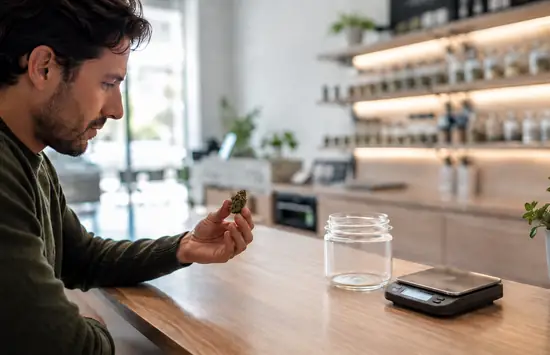
Eighths, Quarters, and Zips: Cannabis Weight Slang Decoded
If you have ever stood in a dispensary feeling unsure whether to ask for a quarter, an eighth, or a zip, you are in good company. Weed weights come with their own dialect. Some terms are pulled straight from grams and ounces. Others come from sandwich bags, hip-hop verses, and decades of underground vocabulary built when prohibition was still in full swing. Here is the whole language, broken down without the filler.
Why does weed have so many slang names for amounts?
Linguists have catalogued over 1,200 slang names for cannabis the substance alone. Once you add slang for amounts, prices, and packaging, the list keeps growing.
Most of this language was forged when buying or holding weed could land you in a cell. Buyers and sellers built coded vocabulary that flew over the heads of cops, parents, and bosses. The slang outlived the prohibition that birthed it because cannabis culture loves an inside joke, and because 88% of US adults now support legalizing cannabis for medical or recreational use. The words stuck around even as the laws shifted.
What is a gram of weed?
A gram is the smallest amount you will see at a dispensary. It rolls up into one fat joint or two thin ones, depending on the technique.
The math is simple. One gram is one-thousandth of a kilogram. Cannabis is one of the few consumer goods in the United States still sold by metric weight, because the trade locked into grams long before legalization made it official.
Slang you might hear: "G," "single," "gram." That is about it. The unit is too small to have built a deep vocabulary.
A gram is the move when you are testing a new strain, working with a tight budget, or just want one solid session.
What is an eighth of weed?
An eighth is one-eighth of an ounce, which works out to 3.5 grams. It is the most popular dispensary purchase in the country.
The math: one ounce equals 28 grams (technically 28.35, but every dispensary rounds). Divide by eight and you land at 3.5. An eighth fits in a small jar, gives you about seven half-gram joints or roughly a dozen bowls, and lasts most casual smokers a week or two.
Slang you might hear: "Eighth," "eighter," "slice," and sometimes "cut" from older heads, referencing how a portion was once literally cut from a larger stash.
If you only memorize one weight, make it the eighth. It is the unit menus default to, the size deals are built around, and the easiest way to get good flower without overcommitting.
What is a quarter of weed?
A quarter is a quarter-ounce. Seven grams, technically 7.0874 but rounded down. It is the next step up from an eighth and a popular jump for regular smokers.
If an eighth is a week, a quarter is two weeks, or one solid weekend session with friends.
Slang you might hear: "Quad," "Q," or just "quarter." When somebody says they are grabbing a quad, they mean seven grams.
Quarters usually come at a slightly better per-gram price than eighths. Stocking up makes sense if you go through flower regularly.
What is a zip of weed?
This is where the slang gets fun. A zip is one ounce, or 28 grams. The term has been around for decades, and the most accepted theory is that an ounce of dry flower fits neatly into a Ziploc-style sandwich bag, and "zip" became shorthand. Others trace it back to handwritten "Oz" markings on bags getting read as "zip."
A zip is the legal possession ceiling for adults in most states with recreational programs. Colorado, California, Michigan, New York, and most other adult-use markets cap personal possession at one ounce. It is also the largest amount most retail dispensaries will sell in a single visit.
Slang you might hear: "Zip," "an O," "ounce," sometimes "single" on the East Coast. A "double zip" is two ounces and is rarely heard at retail.
If you are throwing a party, hosting a long smoke session, or splitting a bulk buy with friends, a zip is the unit that does the math. Eight eighths, four quarters, or 28 grams in one bag.
What about a half ounce?
A half is exactly what it sounds like. Half an ounce, or 14 grams. Slang options include "half," "half-O," and "half-zip." It splits the difference between a quarter and a zip, and it is a common buy for regular consumers who want bulk pricing without committing to a full ounce.
What is a dub of weed?
This one is about price, not weight. A "dub" or "dub sack" is $20 worth of weed. The actual gram count depends entirely on quality and location. In a state with cheap legal flower, a dub might come close to an eighth. In a tourist market with top-shelf product, a dub might be a single gram.
Slang you might hear: "Dub," "twenty sack," "double dime.
The cousin term is the dime bag, $10 worth of weed. The label comes from "dime" being old slang for a ten-dollar bill. The same logic gives us nickel bags ($5), dimes ($10), and dubs ($20).
Dubs and dimes were the workhorses of pre-legalization cannabis culture. They show up less in dispensary pricing, where everything gets weighed to the gram and printed on a menu, but the words still travel.
Cannabis weight chart at a glance
Here is the master cheat sheet:
<{$tag} class="blog__ul">Screenshot it, tape it to your fridge. After two or three dispensary trips, this becomes second nature.
Where this vocabulary came from
Most American weed slang traces back to the jazz era, when cannabis was first criminalized and players in New Orleans and New York coined codes to talk about it without getting cuffed. Words like "reefer," "muggles," and "tea" came from that period.
The number 420 is younger. A group of high school kids in San Rafael, California known as the Waldos used "4:20" as their meet-up time for after-school cannabis sessions starting in 1971. The term spread through Grateful Dead circles, hit High Times magazine in the early 1990s, and became the global cannabis holiday it is today.
Weight terminology evolved on parallel tracks. Some came from drug-trafficking shorthand (zip, QP, elbow). Some came from price points (dime, dub, nickel). Some came from straight metric math (gram, eighth). The result is a vocabulary that mixes street, science, and culture in equal parts.
How Barney's Farm thinks about weight
After 30+ years of breeding and 40+ Cannabis Cup wins, our team has watched grams turn into ounces and ounces turn into harvests. From a breeder's seat, weight is everything. We chase yield, but we also chase the kind of weight that holds up after a proper cure: dense buds, deep resin coverage, and structure that does not collapse when you pinch it.
Two strains in our US catalog consistently deliver weight worth the slang.
Acapulco Gold carries cannabis history in its name. The strain itself is a sativa whose name was already American slang for top-shelf weed by the late 1960s, when "Acapulco gold" meant the cleanest, brightest flower you could find anywhere. Our version finishes around 26% THC and gives you the same uplifting cerebral profile that built the legend. When somebody buys an eighth of Acapulco Gold, they are buying decades of culture in a small jar.
Pineapple Express became a household name after the 2008 movie of the same title, but the strain reputation is real. Our version pushes 28% THC with a tropical pineapple and cedar profile that hits the nose before the bag is even open. It is the kind of flower that moves heavy on dispensary menus because the smell sells itself, and a quarter of Pineapple Express is the kind of bag people remember.
In our experience, the customers who know their weights also know their strains. They are not buying an eighth of generic weed. They are buying an eighth of a specific cultivar with its own genetics, terpenes, and effects.
Quick tips for buying by weight
Start with an eighth. It is the sweet spot for trying a new strain without locking in a quarter or a zip you might not love.
Know the per-gram price. A $35 eighth comes out to $10 per gram. A $50 quarter is about $7.14 per gram. A $200 zip is also around $7.14 per gram. The bigger the bag, the better the leverage.
Check the rounded weights. A jar marked 3.5g should weigh 3.5g, not 3.3g. Most legal dispensaries are dialed in on this, but a small kitchen scale is a cheap insurance policy worth owning.
Mind possession limits. In most legal states, one ounce is the public possession ceiling. A few states allow two ounces or higher. Check state law before stocking up, especially if you are crossing county lines.
Slang travels. A budtender in California might call your purchase a zip. A budtender in Florida might call it an O. Same weight, same price, different vocabulary. Roll with it.
That is the full vocabulary. Once you have the weights mapped, the rest is just figuring out what works best for you.
Barney's Farm has been developing premium cannabis genetics since the 1980s, with over 40 Cannabis Cup wins. Explore our full cannabis seed catalog and find strains bred for every climate and skill level.