
 Autoflower Seeds
 Feminized Seeds
 New Releases
 USA Cannabis Seeds
 High THC Strains
 High Yield Cannabis Strains
 Precision F1 Hybrids
 Washing Strains
 Cup Winning Cannabis Seeds
 Chill Out Cannabis Strains
 Amsterdam Cannabis Seeds Classics
 Best Taste & Aroma Cannabis Seeds
 Regular Seeds
 Merchandise
 Merchandise
 Blog
Blog Contact Us
 Wholesale Login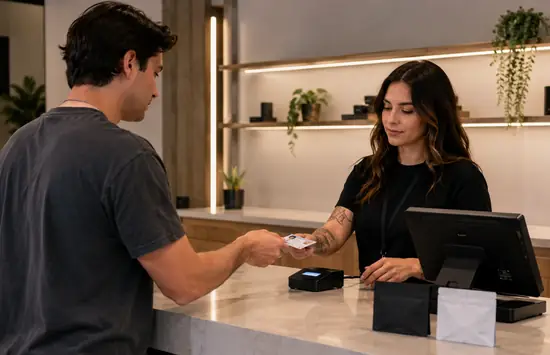
Do Dispensaries Track Your Purchases? ID Scans, Databases, and Your Privacy
You hand your ID across the dispensary counter. A scanner beeps. A budtender taps your name into a screen. And a small voice in the back of your skull asks: is this going on a list somewhere? Does someone now know exactly how much OG Kush you grabbed on a random Tuesday?
It is a fair thing to wonder, and the real answer is calmer and stranger than the paranoia suggests. Dispensaries do collect data. Most of it never reaches any government. The thing actually worth guarding against is not a federal agent reading your receipt. It is a hacker reading the dispensary's database. Here is what really happens to your information, who gets to see it, and how to hand over less of it.
Why do dispensaries scan your ID?
The scan is mostly about the shop staying out of trouble, not building a file on you. Selling to a minor can cost a dispensary tens of thousands of dollars and its license, so age checks are not optional. A few reasons that scanner sits by the door:
Age and fake ID checks. The machine confirms you are 21, or a valid medical patient, and flags forged or expired cards that a tired doorperson might wave through.
Purchase limits. Most states cap how much you can buy in a single day. The system keeps a running total so the shop does not accidentally sell you past the legal line.
Anti-looping. Hitting your daily max at five shops in a row to resell is called looping. Chains sync purchase data between locations to catch it and shut it down.
Loyalty and marketing. If you join the rewards program, the shop logs what you buy so it can send you deals. This part is optional, even when the upsell makes it feel mandatory.
None of that requires the scan to ever leave the building. In several states the law actively forbids the shop from keeping your ID data at all. Illinois, for example, requires dispensaries to purge the information pulled from a scanned ID rather than store it. The cameras pointed at the register are a separate thing, required in most states for security, and that footage usually sits unwatched unless something goes wrong.
Does the government know I buy weed?
Short version: there is no federal list of people who buy recreational weed. No agency keeps a national logbook of your dispensary receipts with your name stapled to each gram.
What does exist is state track-and-trace. Every legal state runs a system that follows the plant from seed to sale. The catch growers miss is that it tracks the product, not the person at the register. Regulators want proof that flower grown on a licensed farm got sold through a licensed shop and did not vanish into the gray market along the way. Your identity is not the point of that system.
Federal law is where it turns weird. Marijuana spent decades as a Schedule I drug, filed next to heroin. In April 2026 the Justice Department reclassified state-licensed medical marijuana to Schedule III while leaving recreational cannabis in Schedule I. That is a real shift for medical operators, and a reminder that recreational buyers are still, on paper, on the wrong side of federal law.
Even so, individual buyers were never the federal target. The 2013 Cole Memo told federal prosecutors to leave state-legal cannabis alone, and although it was scrapped in 2018, no wave of arrests of ordinary customers ever followed. Federal attention goes to cartels and large-scale trafficking, not your eighth of Gelato.
Medical patients are a different case. Medical programs usually need a state registry to issue your card, so your patient status sits in a government database by design. That data is normally kept confidential and walled off from federal eyes, but it exists in a way recreational purchase data simply does not.
Can your dispensary data actually get leaked?
This is the risk that deserves your attention, and it has nothing to do with cops. Dispensaries and the software vendors behind them sit on names, birth dates, addresses, ID photos, and full purchase histories. That is a rich target for the wrong people.
In late 2024 a breach at the California brand STIIIZY exposed customers' driver's licenses, passports, and transaction histories after hackers hit its point-of-sale vendor. Hundreds of thousands of people were notified. That data did not slip out because of a warrant. It slipped out because a third-party system got hit by a ransomware crew, and your details were sitting inside it.
That is the pattern worth fearing. The more shops that scan and store your details, the more copies of your information live on servers you will never see and cannot control.
Cannabis data also carries weight that an old grocery loyalty card never did. Weed is still federally illegal, plenty of employers still drug test, and a leaked purchase history tied to your real name can follow you into a job application, a custody fight, or a security clearance interview. A criminal who grabs that data can use the stigma itself as leverage. That is why a dispensary breach stings harder than a leak from your local coffee chain.
Is there a money trail when you buy weed?
Cash leaves the smallest footprint. The second you pay another way, a record starts forming.
Banks are stuck in a bizarre position. Because weed is still federally illegal, any bank that serves a cannabis business is required to file suspicious activity reports with the Treasury's financial crimes unit, no matter what state law says. Those reports track the business and its accounts, not your personal purchase, but they show how much federal paperwork hovers around every legal sale.
Card payments pile on another layer. Plenty of dispensaries route debit or cashless ATM transactions through workarounds, and those can surface on your bank statement with the shop's name attached. If you would rather your bank not see where you spent your Friday night, cash is still king.
How do you keep your weed buying private?
You cannot rewrite a shop's database, but you can shrink your footprint to almost nothing:
Pay cash. No card means no bank record and far less data tied to your name.
Skip the loyalty program. Trading your purchase history for coupons is only a fair deal if you actually want it. You can buy without enrolling.
Ask about data retention. In some states the law forces shops to delete ID data quickly. Ask how long this one keeps yours, and whether they store the ID photo.
Read the privacy policy. Dull, yes. But it tells you whether your details feed a marketing engine or get wiped after the sale.
The most private weed is the weed you grow yourself
Here is the part no dispensary will volunteer. Every privacy worry on this page evaporates the moment you grow your own. No counter, no scanner, no database entry, no vendor holding a photo of your license. Just you, a seed, and a quiet corner of a closet.
Barney's Farm has spent nearly forty years breeding genetics that hold up for home growers, not only commercial farms. If you have never grown before, start with something forgiving. Pineapple Express is naturally resistant to mold and disease and asks for no special skill, which makes it one of the easiest first grows on the shelf. It pays you back with sweet tropical flavor and an energetic, sociable high that suits a low-stress beginner run.
Once you have a harvest behind you, Blue Gelato 41 is the flavor upgrade. This indica-leaning cross of Blueberry, Thin Mint Girl Scout Cookies, and Sunset Sherbert pushes THC up toward 28 percent and buries its buds in resin, with a sweet citrus profile that has made it one of our most popular US strains. It is a touch taller and a little more demanding, which is exactly what a second grow should be.
Growing at home is not legal everywhere, and plant limits swing wildly from state to state, so check your local rules before you plant a thing. If you want the full picture on what shifted for seeds and federal law this year, our guide on whether you can still buy cannabis seeds online in 2026 breaks the whole mess down.
So, do dispensaries track your purchases?
Yes, within their own four walls, mostly to stay legal and to sell you more next time. Does the government keep a master list of every gram you carry out the door? No. The threat actually worth planning around is a data leak, not a watchlist. Pay in cash, opt out of whatever you can, and if real privacy is the goal, the surest answer has always been the oldest one: grow it yourself.
Barney's Farm has been developing premium cannabis genetics since the 1980s, with over 40 Cannabis Cup wins. Explore our full seed catalog and find strains bred for every climate and skill level.