
 Autoflower Seeds
 Feminized Seeds
 New Releases
 USA Cannabis Seeds
 High THC Strains
 High Yield Cannabis Strains
 Precision F1 Hybrids
 Washing Strains
 Cup Winning Cannabis Seeds
 Chill Out Cannabis Strains
 Amsterdam Cannabis Seeds Classics
 Best Taste & Aroma Cannabis Seeds
 Regular Seeds
 Merchandise
 Merchandise
 Blog
Blog Contact Us
 Wholesale Login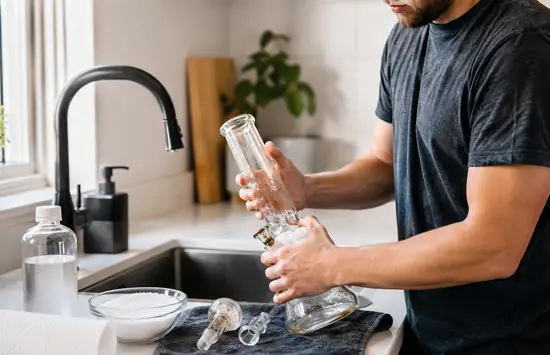
How to Clean a Bong (And Why You Really Should)
Your bong sits there. Murky water, brown ring around the chamber, smell creeping into the room. You know it needs a clean. You also know you'll probably put it off until tomorrow.
Here's the deal: a clean bong rips smoother, tastes like the strain you actually bought, and won't deposit half the periodic table into your lungs. A dirty one does the opposite on every count.
This is the article that explains why tomorrow needs to be today, and exactly how to get the job done in about ten minutes with stuff already in your kitchen.
Why does bong water turn into a science experiment so fast?
Stagnant water plus organic matter equals biofilm. That slimy ring forming around your waterline is bacteria building a shelter for itself, and it doesn't take long. Public health guidance on water systems confirms that biofilms form readily under stagnant conditions wherever moisture, surfaces, and time meet.
Bong water hits all three of those conditions and adds a fourth: combusted plant material. Every hit pulls tar, ash, and resin into the water. The water cools your smoke and traps some of the gunk, which is the whole point of using one. The downside is that gunk has to live somewhere now.
After 24 hours, you've got an ecosystem. After 72 hours, it smells like one.
What actually happens if you smoke a dirty bong?
You inhale whatever is growing in there. That's not a scare tactic, it's documented in medical case reports.
One peer-reviewed case study describes a patient who developed life-threatening Pseudomonas aeruginosa necrotizing pneumonia traced directly to bacteria cultured from his bong. Cultures from the patient's sputum and swabs from the device matched. The infection required hospitalization and aggressive treatment.
Aspergillus is the other big concern. This is a mold that lives on cannabis flowers and survives combustion. Researchers documenting chronic necrotizing pulmonary aspergillosis in cannabis users found that fungal spores can make it through the lighter and into the lungs. Add a damp, resin-coated environment for those spores to colonize, and you've built a real problem for yourself.
Even when nothing serious develops, dirty bong water dulls flavor, restricts airflow, and makes every hit harsher than it should be. Resin coats the inside of the chamber and downstem, narrowing the space your smoke has to travel through. The water you thought was filtering things stops doing its job and starts adding new things instead. That's the everyday cost.
What's the best bong cleaning solution?
The classic combo is isopropyl alcohol and coarse salt, and it's classic because it works.
Isopropyl alcohol is a solvent that dissolves resin on contact. It also kills most bacteria, viruses, and fungi within seconds at concentrations above 70%, which is why it's the go-to disinfectant in clinical settings. The salt does what alcohol can't: physical scrubbing. Together they break down both the sticky and the stubborn.
For glass bongs, here's what works:
Use 91% or 99% isopropyl alcohol. Higher concentration, faster cleaning. Lower percentages mean more water and less solvent, so resin takes longer to break down.
Coarse salt beats table salt. Epsom, kosher, or rock salt all work. The bigger grains scrub harder without dissolving instantly. Iodine-free is preferred to avoid any leftover taste.
Hot water first, never boiling. Rinse with hot water before adding cleaner. Boiling water can crack cold glass through thermal shock. Warm water loosens fresh resin so the alcohol has less work to do.
How do you actually clean a glass bong, step by step?
<{$tag} class="blog__ul">For caked-on residue, soak overnight before shaking. The alcohol will do most of the work for you while you sleep.
What if you don't have isopropyl alcohol?
White vinegar plus baking soda is the household alternative. Pour in a few tablespoons of baking soda, follow with white vinegar, and let it fizz for ten to fifteen minutes before scrubbing and rinsing. It's slower than alcohol and won't disinfect as thoroughly, but it gets visible grime out.
For silicone or acrylic bongs, skip the alcohol entirely. Both materials degrade with strong solvents and can scratch under coarse salt. Warm water and dish soap work fine. Most silicone is dishwasher safe.
Whatever you reach for, avoid bleach and household disinfectants like Lysol or Pine-Sol. These products were not designed for surfaces that touch your lungs, and the residue is hard to fully rinse out.
How often do you really need to clean a bong?
Change the water after every session. This one isn't negotiable. Fresh water is free and takes thirty seconds.
Rinse the chamber every couple of days. If you're a daily smoker, just run hot water through, swirl, and dump.
Deep clean every one to two weeks. This is the alcohol-and-salt session. More often if you smoke heavily, less often if your bong barely sees use.
If your bong has percolators or any kind of internal architecture, lean toward the upper end of that schedule. More surface area means more places for resin to hide, and percolator slits are particularly stubborn once gunked up. A pipe cleaner or thin straw brush helps reach into those tight spots between deep cleans.
What 30 years of breeding has taught us about clean glass
After three decades of breeding work and 40+ Cannabis Cup wins, our team has tested thousands of phenotypes through clean glass. Here's the practical truth: a dirty bong flattens out the parts of a strain we work hardest to develop. The terpene nuance disappears under stale resin. The notes that should sing get muffled.
In our experience, two things separate growers and smokers who actually taste their flower from those who don't. Fresh water every time, and a deep clean before evaluating anything new.
This matters most with terpene-forward genetics. Take Pineapple Chunk as an example. The cross between Pineapple, Cheese, and Skunk #1 produces resin-heavy buds with a tropical sweetness sitting behind earthier notes. Through clean glass, all three layers come through clearly. Through a dirty bong, you're tasting old smoke instead.
The same principle applies to Strawberry Lemonade, where the citrus and berry profile depends on getting the limonene and terpinolene to your palate uninterrupted. Resin-coated glass strips that out before it ever reaches you.
If you're investing in good genetics, the cheapest upgrade you can make is a bottle of 91% iso and a bag of rock salt.
Bong maintenance habits that keep it cleaner longer
A few things our team has picked up over the years that make deep cleans less of a chore:
<{$tag} class="blog__ul">A clean bong gives you back what you paid for. Actual flavor of your flower, smooth airflow that doesn't fight you on every pull, and lungs that aren't pulling extra workload. The whole job takes ten minutes, the supplies cost less than a meal, and the result is the difference between tasting what you grew or bought versus inhaling stale ghosts of last week's session.
If you only take one habit from this whole article, make it dumping the water after every use. That single thirty-second move does more for your bong (and your lungs) than any deep clean ever will.
Get the salt out. Crack the alcohol. Your bong is waiting.
Barney's Farm has been developing premium cannabis genetics since the 1980s, with over 40 Cannabis Cup wins. Explore our full cannabis seed catalog and find strains bred for every climate and skill level.