
 Autoflower Seeds
 Feminized Seeds
 New Releases
 USA Cannabis Seeds
 High THC Strains
 High Yield Cannabis Strains
 Precision F1 Hybrids
 Washing Strains
 Cup Winning Cannabis Seeds
 Chill Out Cannabis Strains
 Amsterdam Cannabis Seeds Classics
 Best Taste & Aroma Cannabis Seeds
 Regular Seeds
 Merchandise
 Merchandise
 Blog
Blog Contact Us
 Wholesale Login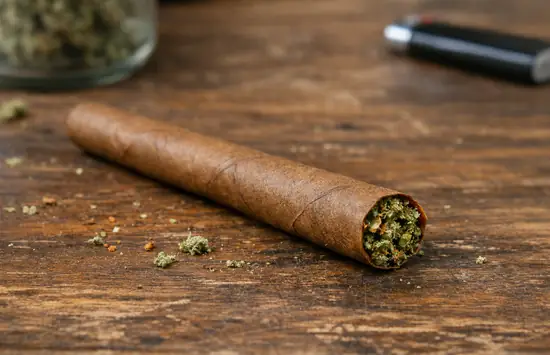
Infused Pre-Rolls Are the Fastest Growing Product in Cannabis — Here's Why
Pre-rolls are now the fastest-growing product category in the entire North American cannabis market. Through the first ten months of 2025 alone, over 310 million pre-roll units were sold across 13 U.S. recreational markets, generating nearly $2.8 billion in revenue and capturing a 15.8% market share. In the U.S., pre-rolls now move more units than flower. In Canada, pre-rolls have overtaken flower entirely to become the top-grossing cannabis product in the country, outpacing it by $38 million at mid-2025.
But the real engine inside that growth? Infused pre-rolls. And understanding why they dominate tells you a lot about where the entire industry is heading.
The Infused Takeover
Infused pre-rolls — joints that combine flower with a concentrate like live resin, rosin, kief, or distillate — now account for 48.5% of all U.S. pre-roll revenue in 2025. That's up 14% year-over-year. In unit volume, infused products represent 38% of pre-rolls sold, a 28% increase from 2024. From 2021 to 2025, infused pre-roll revenue grew 253%, dwarfing the 74% growth of hybrid pre-rolls and 80% growth of vapes over the same window.
In California, the most mature legal market in the U.S., infused pre-rolls made up 66.3% of all pre-roll sales between December 2024 and February 2025. Two out of every three pre-rolls sold in the state had some form of concentrate in them.
According to Cannabis Science and Technology, which partnered with analytics firm BDSA for its 2025 state of the industry report, pre-rolls hit $4 billion in U.S. sales and are projected to see the highest compound annual growth rate (10%) of any major cannabis category through 2029. U.S. regulated cannabis sales overall are forecast to reach $39.1 billion by that year.
So what happened? Why did a product once associated with bottom-shelf trim become the industry's hottest segment?
Convenience Hit Different This Time
Part of the answer is simple: people want things that work right out of the package. No grinder. No rolling papers. No technique. You open the tube, spark it, done. For new consumers walking into a dispensary for the first time, a pre-roll is the least intimidating purchase on the shelf.
But convenience alone doesn't explain the infused boom. Vapes are convenient too. Edibles require zero effort. The infused pre-roll caught fire because it delivered something specific: a concentrated, full-spectrum smoking experience in a traditional joint format.
Consumers wanted potency — 70% of pre-roll buyers rank it as their top purchasing factor. They also wanted flavor. And they wanted the ritual of smoking a joint, not hitting a battery. Infused pre-rolls delivered all three at once.
Five-packs of mini-joints have become the dominant format. Multi-packs now represent nearly half of all pre-roll sales in the U.S. and a staggering 85% in Canada. Consumers find something they like, buy more of it, and don't want to keep going back to the dispensary every other day.
The Problem Nobody Talks About Enough: Flower Quality
Here's where the conversation usually stops in most industry analysis. The data gets cited. The growth charts get shared. Everyone nods about convenience and potency. And almost nobody talks about the thing that actually makes or breaks every single pre-roll: the flower itself.
You can coat a joint in the most exotic live resin on the planet, roll it in high-grade kief, and pack it in museum-quality glass. If the flower inside is dry, flavorless, or poorly grown, the whole experience falls apart. The burn goes uneven. The flavor profile collapses. That promised "premium experience" tastes like hot cardboard.
This is because cannabis flower is defined at the genetic level long before it ever meets a rolling machine. A plant's DNA determines its terpene production, its trichome density, its cannabinoid ratios, and its structural characteristics. Two plants grown in the exact same room, under the exact same lights, with the exact same nutrients, will produce wildly different flowers if their genetics differ. As Leafly has documented in their series on strain factors, genetics are the starting material — the blueprint for everything a plant can become.
And trichomes — those crystalline structures coating the bud — are where all the good stuff lives. Cannabinoids. Terpenes. Flavonoids. A plant harvested at peak maturity, from stable genetics bred for resin production, will be loaded with these compounds. A plant from unstable or poor genetics, harvested too early or too late, won't.
For pre-roll producers, this matters enormously. When flower gets ground and packed into a cone, there's nowhere for bad genetics to hide. The infused pre-roll market is growing more sophisticated by the month — solventless infusions, hash hole formats, terpene-enhanced papers — and all of it raises the floor for what the base flower needs to deliver.
Terpenes Are Running the Game
The cannabis conversation has shifted hard toward terpenes in recent years, and for good reason. These aromatic compounds do far more than make your weed smell like lemons or diesel. Research published in Scientific Reports found that several cannabis-derived terpenes — including alpha-humulene, geraniol, linalool, and beta-pinene — actually activate CB1 cannabinoid receptors and produce additive effects when combined with THC.
This builds on the entourage effect hypothesis, first described by Israeli chemist Raphael Mechoulam in 1998, which proposes that the full spectrum of cannabis compounds — cannabinoids, terpenes, flavonoids — work together synergistically. The combined effect of all these molecules exceeds what any single compound can do alone.
What does this mean for pre-rolls? Everything. An infused pre-roll made with terpene-rich flower from a genetically distinct cultivar will smoke, taste, and hit differently than one made from generic biomass with distillate poured on top. The base flower's terpene profile interacts with the infusion material. When those profiles complement each other, you get something genuinely complex. When the flower brings nothing to the table, all you taste is the concentrate.
This is the gap between a $3 gas station joint and a $12 craft infused pre-roll that keeps people coming back. And it starts in the seed.
What Barney's Farm Has Spent Decades Doing
At Barney's Farm, genetics are the entire operation. Founded in the late 1980s by Derry, who collected landrace strains across Afghanistan, Pakistan, India, Nepal, Tibet, Thailand, Burma, Vietnam, and China, the company has spent over three decades stabilising and refining cannabis genetics through scientific breeding programmes.
That work is the reason strains like Tangerine Dream and Amnesia Haze became global benchmarks. These cultivars didn't win 40+ Cannabis Cup awards on marketing alone. They won because the genetics consistently produced flowers with extraordinary terpene profiles, high trichome density, and reliable potency.
Here's the process behind it: each strain at Barney's Farm is developed through targeted selection and crossbreeding, optimising for disease resistance, pest resilience, and — critically — cannabinoid and terpene expression. Every batch of seeds undergoes laboratory testing to verify potency, cannabinoid content, and quality. Unique identification numbers ensure full traceability from production to delivery.
That level of genetic stability is exactly what the pre-roll industry needs as it matures. Ohio has already finalized Good Manufacturing Practice (GMP) requirements for cannabis production starting in 2026, aligning the sector with federally recognized manufacturing standards. As regulation tightens and consumers get pickier, the brands that win will be the ones using flower that performs consistently, batch after batch. Inconsistent genetics mean inconsistent products. And inconsistent products kill repeat purchases.
For Growers: This Is Your Moment
The infused pre-roll boom has created massive demand for high-quality flower. Producers across legal markets are scrambling to source or grow cannabis that meets the terpene richness and structural integrity required for premium pre-rolls. U.S. pre-roll sales reached $3.6 billion in 2025, representing 110% growth from $1.7 billion in 2021. The category has been adding roughly $500 million annually, and further growth is expected as markets in Ohio, Minnesota, and eventually larger states come online.
That means growers who can produce terpene-dense, trichome-heavy flower have a real competitive edge — whether they're selling wholesale to pre-roll manufacturers, supplying dispensary house brands, or growing craft flower for their own product lines.
And it starts with what you put in the soil.
Barney's Farm's genetic library is built for exactly this moment. Strains like Critical Kush deliver dense, resinous buds with reliable terpene profiles suited to infusion. Pineapple Chunk produces sweet, tropical flower loaded with the kind of aromatic complexity that makes a pre-roll stand out on the shelf. Cookies Kush and Dos Si Dos 33 offer the modern hybrid profiles that consumers crave — rich in the dessert and fuel terpenes driving today's market trends.
The newer collaborations with US breeders like Doja Pak and Backpack Boyz bring West Coast genetics into the picture — crosses with GSC, Gorilla Glue, and Zkittlez that produce the kind of flower dominating dispensary menus and infused pre-roll lines across California, Michigan, and Colorado.
The Homegrow Angle
Not everyone growing is selling to dispensaries. The global homegrow community is larger than ever. The Czech Republic approved a national measure in late 2025 allowing adults to legally grow up to three cannabis plants, effective January 2026. In the U.S., most legal states permit some form of home cultivation. Social media is full of DIY tutorials on how to infuse joints with rosin, paint them with hash oil, and roll them in kief.
If that's your lane, genetics still matter — arguably more. Without commercial-grade testing equipment, you're relying on the plant's natural expression to carry the experience. Good genetics will give you flower that's dense, flavorful, and coated in trichomes right off the plant. That's the foundation for a homemade infused joint that can hold its own against anything on a dispensary shelf.
Feminized seeds eliminate the guesswork of sexing plants. Autoflower varieties shorten the cycle for growers working with limited space or time. The goal, either way, is to start with genetics that are proven, stable, and bred for resin production.
Where This Goes Next
BDSA projects U.S. regulated cannabis sales will reach $39.1 billion by 2029, with pre-rolls positioned as the category with the strongest growth trajectory. Infused pre-rolls are predicted to cross the 50% market share threshold by 2026. In Canada, pre-rolls already command 32.8% of the total cannabis market.
President Trump's late-2025 executive order directing federal agencies to begin rescheduling cannabis from Schedule I to Schedule III could accelerate everything — new investment, new markets, new legitimacy for the entire supply chain.
The category is getting more sophisticated by the month. Solventless infusions using hash rosin. Hash hole pre-rolls with a core of full-melt concentrate. Custom cannabinoid blends targeting specific effects. And every one of those innovations still depends on the same thing: what the plant produced before anyone touched it with an infusion nozzle. The genetics. The growing conditions. The terpene and cannabinoid profile that only exists because someone bred and selected for it over generations.
That's the foundation. Everything else is dressing.
Barney's Farm has been developing premium cannabis genetics since the 1980s, with over 40 Cannabis Cup wins. Explore our full seed catalog and find strains bred for every climate and skill level.