
 Autoflower Seeds
 Feminized Seeds
 New Releases
 USA Cannabis Seeds
 High THC Strains
 High Yield Cannabis Strains
 Precision F1 Hybrids
 Washing Strains
 Cup Winning Cannabis Seeds
 Chill Out Cannabis Strains
 Amsterdam Cannabis Seeds Classics
 Best Taste & Aroma Cannabis Seeds
 Regular Seeds
 Merchandise
 Merchandise
 Blog
Blog Contact Us
 Wholesale Login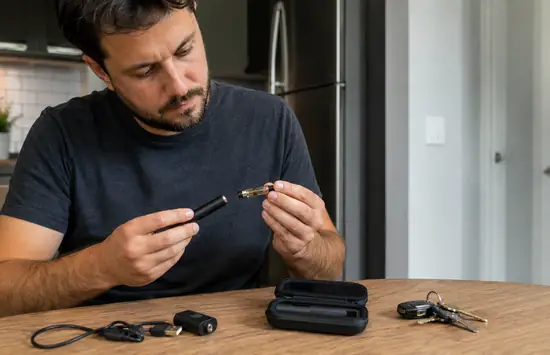
Vape Pen Battery Safety: Why Some Carts Explode (And How to Avoid It)
Vape pens are pocket-sized lithium reactors. Most of the time, they sit there quietly heating oil at the press of a button. Once in a while, they go full firework. The footage of pens shooting flames across a kitchen or charring through a pair of jeans is unsettling, and the people in those videos are usually fine. Sometimes they aren't.
Here's the part nobody likes hearing: almost every "explosion" you hear about is preventable. The chemistry inside a 510 thread battery is well understood and stable when it's left alone. What gets people hurt is cheap hardware, sketchy chargers, and a pocket full of car keys. Let's break down what actually goes wrong, what the science says, and how to keep your sessions on the smooth side.
How Often Does This Actually Happen?
Bad battery events are rare relative to the millions of pens out there. They're also catastrophic when they happen. The U.S. Fire Administration logged 195 separate e-cigarette fire and explosion incidents between 2009 and 2016, with the agency noting that no other consumer product places a lithium-ion battery this close to your face on a regular basis.
Plane cabins are seeing a lot more of it lately. The FAA logged around 50 lithium-ion smoke, fire, and overheating events on US flights in 2025 alone, with vape devices and battery packs leading the list. Two thermal events per week, on average, somewhere in commercial aviation.
Your cart isn't a ticking bomb. The failure mode is real though, and once it starts, you have seconds.
What's Actually Inside Your 510 Battery
A 510 thread battery is a small lithium-ion cell wrapped in metal, capped with a regulator board, and finished with a 5mm threaded connector that grips your cart. The "510" is a thread spec: 5mm diameter, 10 threads. That standard is the reason you can swap any cart from any brand into any other 510 device without thinking.
What you should think about is what's between the cell and the cart. A decent battery has overcharge protection, short-circuit protection, low-voltage cutoff, and usually a 5 to 10 second activation timer so the coil doesn't run hot forever if your button gets pressed in a bag. A bad battery has a cell, a wire, and a prayer. The price difference between the two is usually under twenty dollars.
Voltage range matters more than people realize. Most 510 carts run cleanest somewhere between 2.5V and 3.6V. Push higher and you're not getting more THC, you're getting burnt terpenes, hotter coils, and a faster path to a stressed battery.
Why Do Vape Pens Actually Explode?
The villain is something called thermal runaway. When a lithium-ion cell gets damaged, overcharged, shorted, or hit with the wrong voltage, the internal temperature can spike past 500°C in seconds, vaporizing the flammable electrolyte and rupturing the cell. Once it starts, it feeds itself.
A peer-reviewed analysis of 46 patients hospitalized after e-cigarette explosions found that 69% of injuries hit the groin region and 25% hit the hands, which tells you everything about where people store these things. Most patients were men in their thirties, and a meaningful share had modified their devices to push more power.
Here's the dark joke of it: the chemistry inside your battery is stable as long as nothing goes wrong. The trigger almost always comes from outside the device. Loose batteries shorting against keys. Sketchy chargers cooking cells. Damaged casings. User mods. Knock-off cells masquerading as Samsung or LG.
The Pocket Problem (And Other Common Mistakes)
Your front pocket is a battery's least favorite environment. Loose change, keys, a stray paperclip, any one of those can bridge the positive and negative terminals of a spare cell and start a short circuit. That's why those security camera videos always seem to show somebody slapping at their thigh in horror.
If you carry spare 510 batteries, get a hard plastic case for a few bucks. If you're carrying a pen with the cart already attached, lock the firing button (most decent pens triple-click to lock) and keep it in a dedicated pocket, separate from your house keys. Unsexy advice. That's exactly why people skip it.
How to Spot a Sketchy Battery Before It Spots You
You don't need an electrical engineering degree to tell when a battery is wrong. The signs are obvious if you look.
Weight and feel. A real battery has heft. Counterfeits are noticeably lighter, often with rattling internals. If you shake it and hear plastic clicking, retire it.
The threading. Smooth, gold or silver-toned, no burrs. If your cart screws on crooked or you feel grit when you turn it, that's a worn or fake connector and a recipe for a short.
Heat behavior. A normal battery gets warm during use and cool during charging. If yours runs hot to the touch while sitting idle, or gets uncomfortably hot at the body during a single hit, retire it immediately. Drop dead batteries at a household hazardous waste site, never the regular trash.
The price. A working 510 battery from a real brand starts around fifteen dollars. The five-dollar gas station pen with a logo nobody's heard of is using cells nobody at the major manufacturers wants their name on.
The light pattern. Most 510 batteries blink in a specific pattern when the cell is dying or there's a short. Three blinks usually means the connection is bad, four or five often means the cell is failing. Read your manual once. It takes ninety seconds and could save your face.
Voltage Settings That Don't Burn Your Cart
Variable voltage batteries gave consumers control they didn't know what to do with. If your battery has settings, here's the cheat sheet.
2.4V to 2.8V. The sweet spot for live resin and rosin carts. Cool, terpene-forward, easy on the lungs. If you're vaping flower from a strain like Mimosa EVO in a dry herb vape, this lower range pulls the citrus and berry terpenes through cleanly without scorching anything.
2.8V to 3.2V. The all-purpose middle. Good for most distillate carts. Reasonable cloud, decent flavor, no burning.
3.2V to 3.6V. Thicker oils and worn-out carts. Bigger hits, flatter taste, twice the oil consumption.
Above 3.6V. Stop. You're cooking the heating element, scorching the oil, and stressing the battery for nothing.
If your cart tastes burnt at a setting, drop down a voltage. If nothing's happening at the lowest setting, the cart is clogged or empty, the battery isn't your answer.
Charging Rules That Actually Matter
Most battery accidents happen during charging. The FDA published a short list of charging rules every vape user should know that boil down to this: use the cable that came with the device, charge on a hard flat surface where you can see it, never charge on a bed or couch, and never leave it plugged in overnight. Phone chargers can dump too much current into small vape cells.
If your battery has a USB-C port, plug into a low-amp USB block (1A or 2A), not a fast charger pulling 18W. The battery's internal regulator is built around the assumption that the wall side is supplying a reasonable trickle, not a flood.
When Quality Control Comes from You, Not Your Cart
Most cart explosions trace back to two things: cheap hardware and unregulated supply chains. The first you can fix by buying decent batteries from real brands. The second is harder.
The illicit cart market is a mess. Counterfeit packaging copies legit brands down to the holographic stickers. Fake oils get cut with vitamin E acetate, which kicked off the EVALI lung crisis a few years back. The hardware in those carts is the cheapest possible, often using cells that wouldn't pass any safety test.
Growing your own changes the equation. You see every step from seed to flower, and there's no third party between you and what you're consuming. A terpene-rich strain like Pineapple Chunk dries down with a tropical, dense profile that works beautifully in a dry herb vaporizer, where you skip the lithium battery entirely and just heat plant material in a ceramic chamber. In our experience working with growers across the US, the smoothest sessions come from people who control their input from the soil up. Our team has spent thirty-plus years stabilizing genetics that hold their terpene profile through harvest, cure, and vaporization. Knowing your source beats trusting a stranger every single time.
The Short Version
Don't buy the cheapest battery on the shelf. Don't carry loose cells with your keys. Don't charge with the wrong cable. Don't crank the voltage past 3.6V. Don't trust unregulated carts from the gray market.
A good 510 battery from a reputable brand, used the way the manual says, will last you years without ever once trying to explode in your pocket. Treat it like the small lithium reactor it is, give it the basic respect it asks for, and you'll never end up in a security camera video.
Barney's Farm has been developing premium cannabis genetics since the 1980s, with over 40 Cannabis Cup wins. Explore our full cannabis seed catalog and find strains bred for every climate and skill level.