
 Autoflower Seeds
 Feminized Seeds
 New Releases
 USA Cannabis Seeds
 High THC Strains
 High Yield Cannabis Strains
 Precision F1 Hybrids
 Washing Strains
 Cup Winning Cannabis Seeds
 Chill Out Cannabis Strains
 Amsterdam Cannabis Seeds Classics
 Best Taste & Aroma Cannabis Seeds
 Regular Seeds
 Merchandise
 Merchandise
 Blog
Blog Contact Us
 Wholesale Login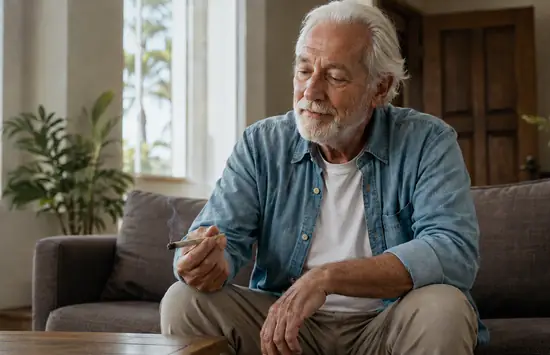
Why Cannabis Use Is Soaring Among Boomers and Seniors
Walk into a New York City dispensary in 2026 and you might be surprised who is at the counter. Past the college kids in beanies, you will see graying hair, reading glasses, sometimes a cane parked against the cabinet.
The folks who used to roll up at Woodstock are back, and they brought their Medicare cards. The numbers are real, the cultural shift is real, and after thirty years of breeding cannabis in Amsterdam, we at Barney’s Farm have watched our customer base age into something nobody saw coming back in the 70s.
This is why.
How many seniors are actually using cannabis these days?
Quite a few, and the slope is steep. A study published in JAMA Internal Medicine found that past-month cannabis use among Americans 65 and older hit 7% in 2023, up from 4.8% in 2021. That is roughly a 46% jump in only two years.
Rewind to 2006 and 2007 and barely 1% of older adults said they had used cannabis in the past year. In less than two decades, a niche has become a movement.
The growth is not concentrated where most people would guess. The sharpest increases are showing up among older adults with college degrees, higher incomes, and women specifically.
Seniors making over $75,000 a year went from the lowest cannabis use rate in 2021 to the highest by 2023. The retiree with the 401(k) and the Pilates membership is now more likely to be a cannabis user than the cliché counterculture holdout. Cannabis has gone respectable in exactly the places people assumed it never would.
Why are baby boomers coming back to weed after all these years?
A lot of them never really left. Cannabis did not show up in the 1960s and quietly disappear. The generation that came of age with Jefferson Airplane and Cheech and Chong put their pipes down for a while because jobs, kids, mortgages, and half a century of federal prohibition made the math ugly.
Now they are retired, the law has cracked open in over half the country, and their knees hurt.
One New York City dispensary owner calls returning older customers "boomerangs," and says they spend more money than younger shoppers. Some come in to chase a memory. Most come in to fix something.
The stigma that used to keep grandma from admitting she smoked is fading fast. Cannabis has moved from the back of the school bus to the medicine cabinet, sitting next to the magnesium and the omega-3s.
For a generation that fought to make it legal, finally getting to age openly with the plant they grew up with feels less like rebellion and more like a debt being paid.
What are older adults actually using cannabis for?
Not to get blasted. A nationally representative survey of more than 3,300 adults aged 50 and older found that the top reasons older users reach for cannabis are relaxation (81%), sleep (68%), enjoyment (64%), pain (63%), and mental health or mood support (53%).
Arthritis sits right at the top of the pain list. Anyone who has lived with sore joints knows the trade-off with opioids and NSAIDs after a few decades of use can get rough. Liver concerns, dependency risk, stomach issues, the slow stacking of side effects you only notice once they have wrecked your week.
Many older patients have decided that a low-dose gummy before bed beats another round of acetaminophen and tramadol.
The same applies to sleep. Prescription sedatives stack up side effects, and older bodies do not metabolize them gracefully. A small THC and CBD blend, taken right, often gets a senior through the night without the morning fog.
This is not a victory lap for cannabis. The research is still catching up, and serious gaps remain. But what older users are telling researchers is consistent across studies: they are treating something, not just chasing a buzz.
What older adults need to know about today’s cannabis
Here is the part nobody tells your dad. The weed from 1971 and the weed from 2026 are barely the same plant.
Average THC content has roughly tripled, sometimes quadrupled, since the boomers were college freshmen. Modern flower often clocks in north of 25% THC. Some of our newer releases at Barney’s Farm push past 30%.
If your last hit was a skinny joint in a Volkswagen back when Nixon was president, your tolerance is long gone, and what you remember as a casual high will now flatten you for six hours.
In our experience, the smartest move for any older user, returning or brand new, is to start with classic indica heritage. Strains in the Critical Kush family have a long track record for relaxed, body-focused effects, the kind that ease tension without spinning anyone out.
For evening use, our breeding team often points seniors toward Northern Lights, a heavy indica that was already legendary by the 80s. Many returning boomers remember the name, and the sleep-friendly body effect lines up with what most older users actually want from cannabis at the end of the day.
A few practical notes from three decades of working with cannabis:
<{$tag} class="blog__ul">How is the cannabis industry adapting to older customers?
The market noticed before the doctors did. Senior-targeted brands now sell microdose gummies, low-THC tinctures, topical balms aimed at arthritic hands, and product lines named for the specific complaints of being over 60.
Dispensary staff in legal-market states often report that boomer customers are some of their most patient, most loyal, and most engaged shoppers. They ask questions. They read labels. They come back.
The most interesting shift might be in what older users are growing themselves. The home cultivation crowd in states like California, Michigan, and New York has been steadily aging. Retirees with backyard greenhouses are quietly producing better personal stashes than most dispensaries will sell them, at a fraction of the price.
That is where the Barney’s customer mix has tilted in recent years, and frankly, we love it. There is a kind of justice in someone who got arrested for a dime bag in 1973 now legally tending a few plants on their patio in Sacramento.
Are there real concerns about seniors using cannabis?
Yes, and they deserve straight talk.
Cannabis can interact with blood thinners, blood pressure medication, and certain heart drugs. Older brains are more sensitive to THC’s effects on memory, balance, and reaction time.
Falls are a leading cause of injury for people over 65, and adding any intoxicant to that equation is a real risk. Driving while high carries the same weight at 70 as it does at 25, except your reflexes are not what they were.
Modern flower’s higher potency means it is easier to overshoot, especially for someone whose tolerance has not been rebuilt.
Geriatricians have started asking patients about cannabis use, but a lot of seniors still do not bring it up at appointments. That gap is a problem. If you are on multiple prescriptions, your doctor needs to know what is in your system, full stop.
The good news is the conversation is shifting. Most major medical schools now teach at least the basics of medical cannabis. Pharmacy chains are training staff on cannabis-drug interactions. The information infrastructure is finally catching up to the demand.
What this all means
The image of cannabis as a young person’s vice is officially obsolete. Demographically, culturally, and commercially, the most interesting cannabis customer in America right now is somewhere between 55 and 80, owns their home, has health insurance, and would rather skip the prescription drug coupon for the third refill.
Legalization made it possible. Aging bodies made it necessary. And for the first time in modern American history, an entire generation gets to age openly with a plant they have known their whole lives.
At Barney’s Farm, we have been breeding cannabis since 1992. The grower we sold to in 1995 was not usually a stoner kid. He was somebody quietly trying to keep his back from killing him.
Three decades later, that is still our customer. He just has gray hair now and a granddaughter who texts him strain recommendations. Nothing about that strikes us as strange. It strikes us as overdue.
Barney's Farm has been developing premium cannabis genetics since the 1980s, with over 40 Cannabis Cup wins. Explore our full cannabis seed catalog and find strains bred for every climate and skill level.